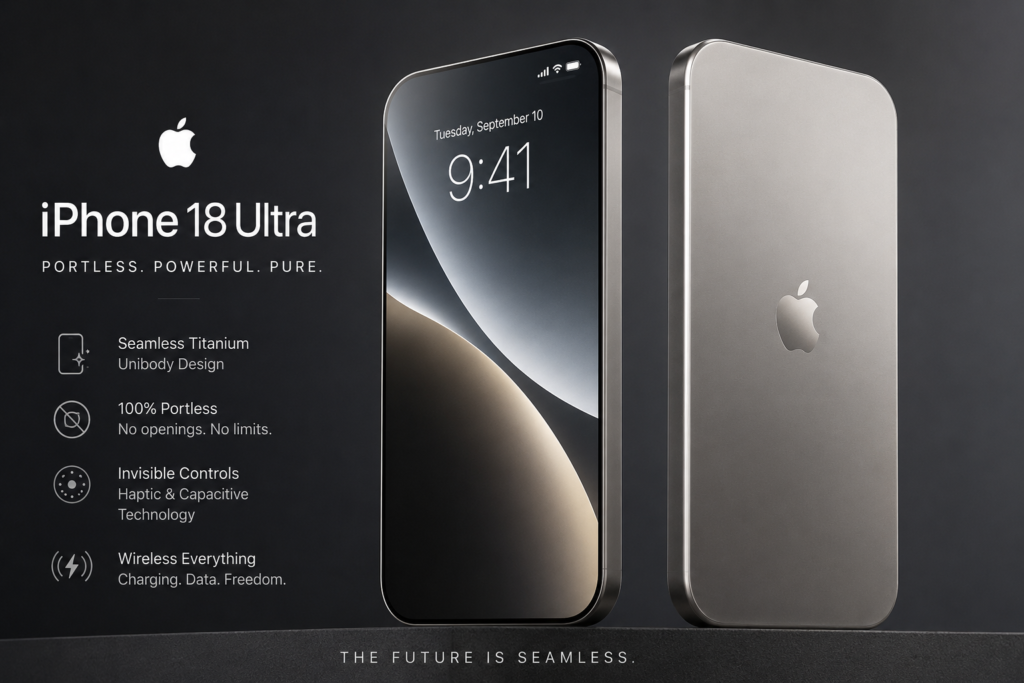
The bottom line: Apple is planning the most radical iPhone redesign ever. Every physical port and button will disappear on the iPhone 18 Ultra. Instead, MagSafe wireless charging and solid-state haptic controls will take over. This is bold. However, it could reshape the entire smartphone industry.
Why Apple Is Removing the Charging Port
Apple began this journey with eSIM-only iPhones in the US. That was a small first step. Now, the company is going all the way by removing its last physical connector.
A portless design brings clear benefits. First, no openings mean far better waterproofing. Second, reclaimed internal space allows a larger battery. In addition, fewer mechanical parts means fewer things that can break. As a result, the phone becomes both more durable and more resistant to the elements.
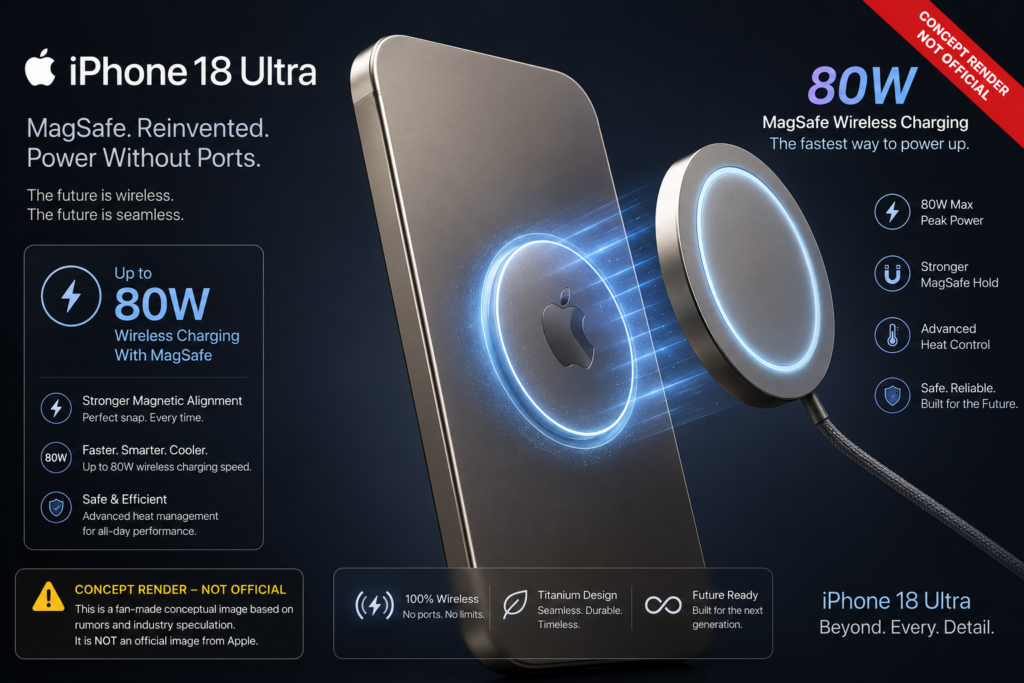
MagSafe wireless charging now delivers 80W speeds. That matches many wired chargers available today. Therefore, losing the port is no longer a real sacrifice for most users. Our detailed guide on Silicon-Carbon 2.0 batteries explains why wireless power keeps improving every year.
How Solid-State Buttons Work
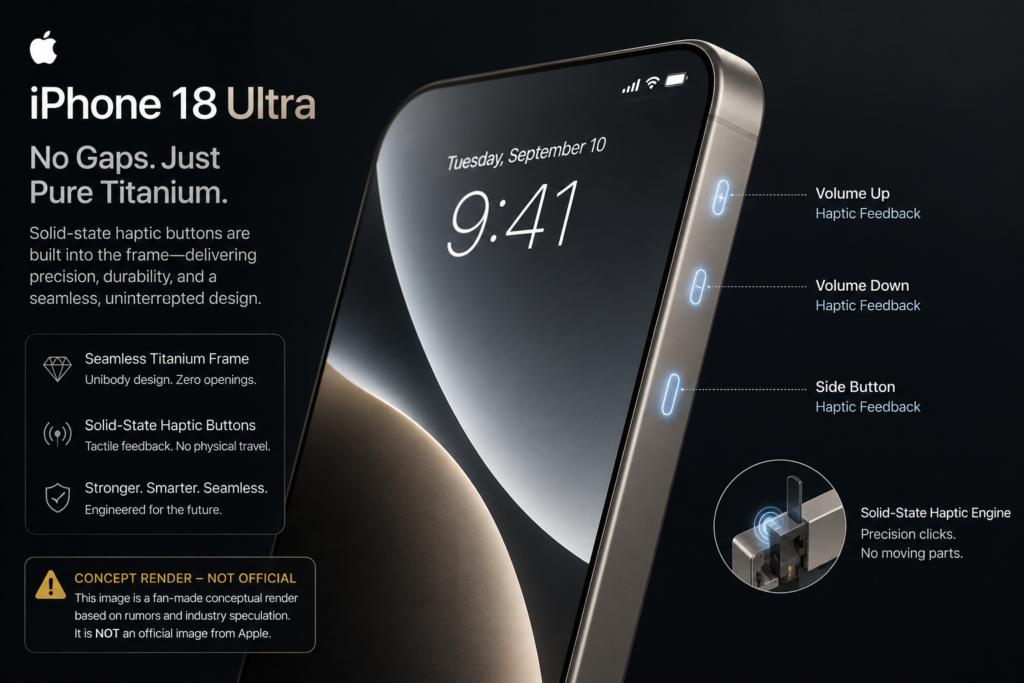
Traditional volume and power buttons will be gone entirely. Flat touch zones replace them along the frame. However, pressing these zones still feels exactly like a real button click.
Apple’s Taptic Engine makes this possible. Tiny vibrations simulate a physical press under your finger. Moreover, this technology already powers the iPhone home button and every MacBook trackpad sold today. Durability is therefore not in question.
Removing mechanical buttons also improves the overall build. Nothing can stick, jam, or wear out over time. Furthermore, a fully sealed frame allows water resistance far beyond any previous iPhone.
Transferring Files Without a Port
No port raises one obvious question: how do you move files? Apple has three clear answers.
First, iCloud syncs content automatically in the background. Second, AirDrop moves large files wirelessly at high speed between Apple devices. Third, MagSafe will include a dedicated data mode for users who need a physical connection occasionally.
Android phones still rely on USB-C cables today, which shows how differently Apple thinks. That said, most iPhone users already move files wirelessly every single day. For them, nothing actually changes. Also, our feature on 6G prototypes and future mobile speeds shows how wireless transfer will improve dramatically over the next two years.
The iSIM Closes the Last Gap
A SIM tray was the last remaining hole in the iPhone frame. Apple solved this cleanly with the embedded iSIM, built directly into the processor. Consequently, there is no tray, no slot, and no physical SIM card needed at all.
The result is a completely unbroken titanium frame. No openings. No gaps. Additionally, iSIM carrier support is expanding fast across India and Europe, so usability is no longer a concern for most buyers.
Display design is evolving just as fast. In fact, our piece on under-display sensors and the end of the notch covers the other half of this ongoing design revolution.
Price and Release Date
Apple will likely reveal the iPhone 18 Ultra at its fall event in September 2026. Rumoured starting price is $1,299 in the US. In India, that works out to roughly Rs 1.1 lakh.
Should You Wait for the iPhone 18 Ultra?
Your answer depends on how you use your phone today. Wireless-first Apple users will love this change. Moreover, the sealed titanium construction will feel more premium than any iPhone built before it.
On the other hand, users who depend on USB-C daily will need time to adjust. Habits and accessories will need replacing. Nevertheless, millions of iPhone users already charge wirelessly every night — for them, this switch is completely painless.
In conclusion, the iPhone 18 Ultra is more than just a new phone. It is Apple’s clearest statement yet about the future of mobile hardware design. Furthermore, if history is any guide, the rest of the industry will follow this direction within two to three years.