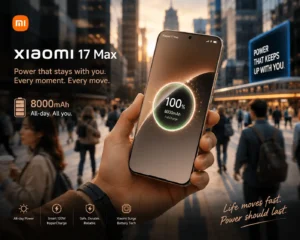
The bottom line: A bigger mAh number generally means better battery life — but chipset efficiency and display settings matter just as much. An 8,000mAh mid-ranger can outlast a 5,000mAh flagship by 40% in real-world usage.
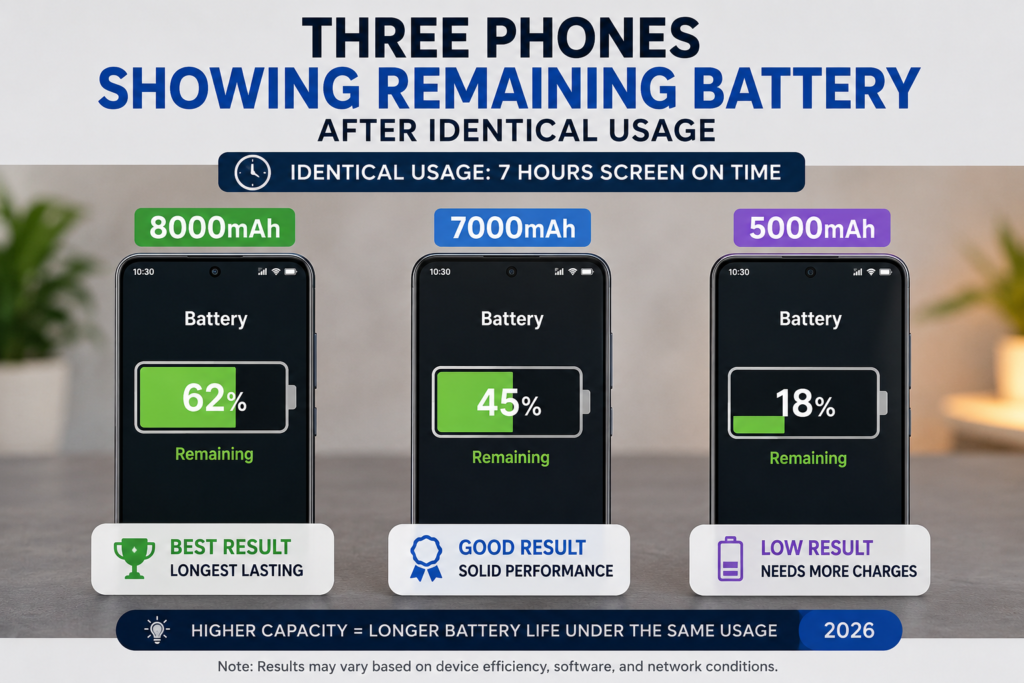
Real-World Screen-On Time
| Phone | Battery | Chip | Screen-On Time |
|---|---|---|---|
| Nord CE6 | 8,000mAh | SD 7s Gen 4 | 14–16 hours |
| Nord CE6 Lite | 7,000mAh | Dimensity 7400 | 12–14 hours |
| Find X9 Ultra | 7,050mAh | SD 8 Elite Gen 5 | 10–12 hours |
| Typical Flagship | 5,000mAh | SD 8 Elite Gen 5 | 7–9 hours |
Why Silicon-Carbon Batteries Change Everything
Traditional lithium-ion hit a density ceiling. Silicon-Carbon (Si-C) stores significantly more energy in the same volume — which is why the Nord CE6 fits 8,000mAh in a phone just 9.2mm thick.
Fast Charging Changes the Equation
An 8,000mAh phone with 80W charging fills up in under an hour. A 5,000mAh phone with 25W charging takes over two hours. For users who charge during the day, charging speed can matter more than raw capacity.
Final Verdict
For maximum endurance, choose the highest mAh you can afford. For convenience, prioritise fast charging speeds. The ideal combination — 8,000mAh plus 80W — is now available at Rs 29,999 with the OnePlus Nord CE6.