Apple is reportedly preparing a dramatic overhaul of its smartphone lineup. Specifically, recent leaks suggest that the tech giant plans to launch the all-new iPhone 17 Air. Indeed, this model will focus on an ultra-slim design, replacing the traditional Plus model in late 2026.
The goal is to provide a sleek, lightweight device for users who find the current Pro Max models too bulky. Consequently, tech enthusiasts in India and the USA are already anticipating this thin-chassis launch. Overall, this design shift could redefine premium aesthetic standards across the mobile industry.
Designing a device this thin introduces massive engineering challenges for Apple. For instance, finding space for speakers, charging ports, and thermal management requires complete logic board restructuring. Therefore, this model will represent a showcase of Apple’s advanced hardware capabilities.
Additionally, supply chain sources suggest that the chassis will use a newly engineered aluminum alloy. Specifically, this ensures structural rigidity while keeping the device exceptionally light. Overall, it targets a premium aesthetic that appeals to design-focused buyers globally.
Apple iPhone 17 Air Leaked Specifications
To help you understand what this new model offers, we summarized the key leaked details below. Specifically, these specifications reflect current industry intelligence from supply chain sources.
Furthermore, these parameters show how Apple balances a thin chassis with performance. Indeed, certain compromises were made to achieve the slim form factor. Therefore, inspect these specifications carefully before planning your next upgrade.
| Feature | Leaked Specification | Expected Impact |
|---|---|---|
| Chassis Thickness | ~5.0 mm (Aluminium Alloy) | Extremely thin and light feel |
| Processor | Apple A20 Chip (3nm) | Top-tier efficiency and AI power |
| Display Size | 6.6-inch OLED (120Hz ProMotion) | Excellent fluid scrolling and visuals |
| Primary Camera | Single 48MP Rear Sensor | Saves interior space for thin build |
Why Apple is Launching an iPhone 17 Air
The standard and Plus models have faced decreasing sales numbers in recent cycles. Specifically, users are increasingly choosing either the cheapest base model or the top-tier Pro configurations. Consequently, Apple hopes that the Air model will revitalize interest in the mid-high tier.
Indeed, this new segment focuses purely on structural design rather than raw camera specs. Overall, it targets premium buyers who do not need professional telephoto lenses but want a phone that looks futuristic. Therefore, it is a highly calculated gamble for Apple.
Additionally, the thinness serves as a key marketing tool to combat major Android rivals. Specifically, brands like Honor and Vivo are releasing folding phones that are thinner than traditional block models. Therefore, Apple must demonstrate its own micro-engineering mastery to retain its design leadership.
Design Deep-Dive: Engineering a 5.0mm Frame
The main selling point of the iPhone 17 Air is its ultra-thin chassis. In contrast to the heavy triple-camera flagships, this phone will use a lightweight aluminum chassis. Therefore, users who value comfort and portability will find it highly appealing.
For context, compare this design shift to the competing flagships. Specifically, you can read our detailed Samsung Galaxy S26 Ultra vs iPhone 17 Pro Max comparison to see how Apple and Samsung currently battle in weight and size. Consequently, this new Air model aims to capture a completely different market segment.
Furthermore, reducing the frame to ~5.0mm requires a completely redesigned battery pack. Specifically, Apple is implementing new high-density cell structures to preserve battery longevity. Overall, this prevents the device from dying halfway through the day despite its small thickness.
However, the lack of space means that the phone will not feature a physical SIM tray in the US. Indeed, Apple is pushing eSIM adoption worldwide to save valuable internal space. Consequently, international travelers must adapt to this digital-only standard.
Additionally, the heat dissipation system uses advanced vapor chambers instead of bulky graphite sheets. Specifically, this keeps the metal frame cool even under sustained processor workloads. Ultimately, this engineering ensures a stable user experience.
Under the Hood: A20 Chip and iOS 27
Under the hood, Apple plans to implement its next-generation A20 processor. Furthermore, this chip is designed to run complex local AI features smoothly. Indeed, you can check our post on iPhone 18 Pro Max specs and A20 chip leaks to understand how Apple is shaping its future silicon architecture.
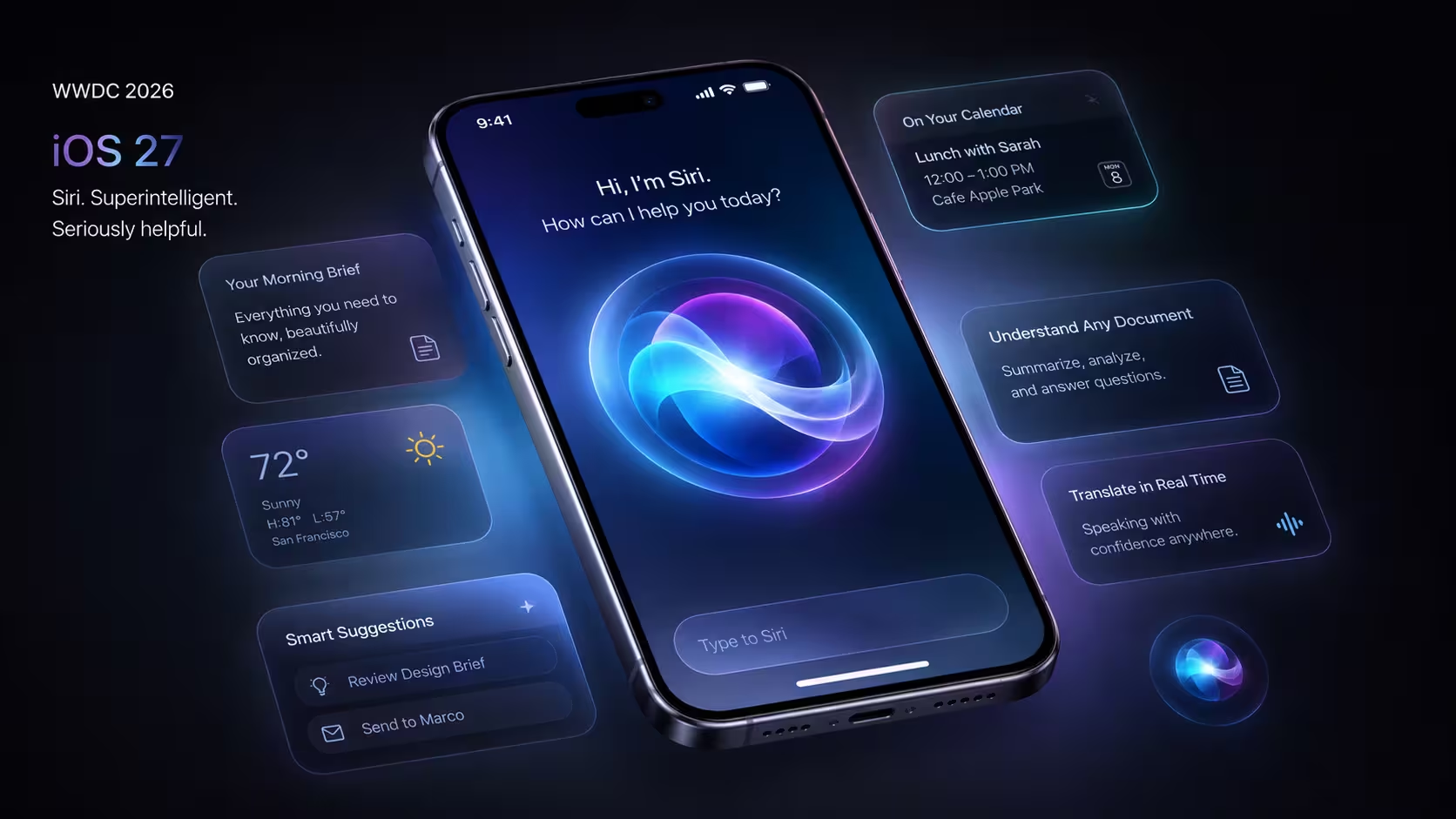
Additionally, the hardware will integrate tightly with Apple’s latest software features. For instance, the new operating system will include deep Siri integrations. Therefore, read our breakdown of iOS 27 features and Siri upgrades to see what tools will be available at launch.
The A20 chip utilizes a refined 3nm manufacturing node from TSMC. Specifically, this process reduces power consumption by 20% compared to the older generation. Consequently, this efficiency is key to maintaining good battery life with a smaller cell.
Moreover, the neural engine is optimized for on-device voice processing. Indeed, this allows the Siri assistant to complete complex workflows without connecting to external servers. Therefore, user privacy is maintained at a much higher level.
Ultimately, this combination of silicon and software represents Apple’s primary competitive advantage. Indeed, the tight optimization ensures that the phone feels incredibly fast despite having less RAM than competing Android models. Therefore, we expect outstanding real-world performance.

Global Pricing, Availability, and Indian Production
Pricing is expected to start at around $1,299 in the United States and approximately ₹1,29,900 in India. Specifically, this premium pricing reflects the high cost of engineering such a thin device. That said, the single-camera setup might polarize buyers who expect multiple zoom lenses at this price point.
Moreover, security remains a central focus for Apple’s upcoming hardware. To safeguard your investment, we recommend studying how the iPhone Anti-Snatch Lock works. Overall, this model aims to marry physical elegance with top-tier security standards.
Furthermore, Apple has shifted a significant portion of its manufacturing pipeline to India. Specifically, local production facilities will assemble the Air model from day one. Consequently, this helps avoid heavy import duties for the local Indian market.
Additionally, the launch window is scheduled for the second week of September 2026. Indeed, pre-orders will open immediately following the keynote event in both countries. Therefore, buyers should prepare their budgets well in advance.
Ultimately, the global availability of this phone will follow a rolling schedule. Specifically, major cities will receive inventory first, with smaller regions receiving stock in the following weeks. Overall, we expect high demand during the festive shopping season.
Expected Carrier Support and 5G Bands
Global users must consider network band compatibility before purchasing. Specifically, the iPhone 17 Air will support both sub-6GHz and mmWave 5G configurations in the US. Indeed, this ensures blazing fast download speeds on Verizon and T-Mobile networks.
In contrast, the Indian variant will be optimized for Jio and Airtel networks. Consequently, this model will focus heavily on sub-6GHz bands to maximize regional coverage across towns and cities. Therefore, frequent international travelers should check model numbers carefully before making a purchase.
Furthermore, the physical space constraints prevent the inclusion of a dual physical SIM slot. Indeed, Apple is pushing for complete eSIM adoption in the US market to optimize motherboard space. As a result, users will need to register digital carrier profiles instead of using plastic cards.
Charging Speed and Qi2 Wireless Standards
Charging speed remains a critical factor for busy professionals. Specifically, the slim frame limits the size of the internal charging coils and physical ports. However, leaks suggest that Apple will implement new Qi2 wireless charging standards for this model.
This standard provides up to 15W of secure magnetic charging efficiency. Additionally, wired charging via the USB-C port is expected to cap at a conservative 25W. Overall, this prevents thermal damage to the ultra-thin aluminum chassis during fast power-ups.
That said, users must use high-quality certified power bricks to ensure safety. For instance, generic chargers can cause excessive heat buildup inside the slim chassis. Ultimately, utilizing official Apple or certified third-party accessories will prolong the lifespan of your battery.
Retail Availability and Market Competition
Apple plans to distribute the device through major online and offline retail partners. Specifically, US buyers can purchase it from Best Buy and Amazon US, as well as official Apple Stores. In contrast, Indian consumers will find stock on Flipkart and Amazon India at launch.
This launch will face severe competition from major Android flagships. For instance, Samsung’s ultra-slim projects are also scheduled for a late 2026 release. Consequently, Apple relies on its sleek aesthetics and iOS integration to maintain its market dominance.
Furthermore, the high price point might deter budget-focused buyers. Indeed, paying over a thousand dollars for a single-camera device requires careful financial consideration. Therefore, analyze your daily camera usage before deciding to upgrade to this slim model.
Audio Engineering in Restricted Space
Creating good sound quality in a five-millimeter body is an engineering marvel. Specifically, traditional speaker chambers require a significant amount of depth to produce deep bass. Consequently, Apple engineers had to redesign the acoustic transducers from scratch.
Indeed, they are utilizing the metal chassis as a passive radiator to expand sound output. Furthermore, this system works in tandem with software algorithms to deliver spatial audio. Overall, the result is surprisingly rich sound separation for both media playback and calls.
Device Longevity and Screen Durability
An ultra-thin frame raises immediate concerns about device durability. Specifically, users remember the bending controversies of older model iterations. Consequently, Apple has implemented strict structural tests to ensure that the frame does not flex under pressure.
Indeed, they are using a harder grade of aluminum alloy combined with internal reinforcement struts. Furthermore, the front display features an upgraded version of Ceramic Shield glass. Therefore, the device offers excellent protection against accidental drops.
Additionally, the thin design makes screen repairs more expensive due to integrated layers. Specifically, the display panel and the touch digitizer are fused into a single ultra-thin module. Overall, purchasing protective cases is highly recommended to protect your device.
Ultimately, the longevity of the iPhone 17 Air will depend on user care. Indeed, while it is built to be durable, a 5.0mm chassis naturally has physical limits. Therefore, treat this premium device with appropriate care during daily usage.
Verdict & Final Thoughts
Ultimately, the iPhone 17 Air represents a bold design bet. Indeed, whether you prefer multi-lens cameras or a thin chassis, this phone will generate massive discussion. Therefore, stay tuned for the official launch in September 2026.
Furthermore, we advise buyers to weigh their priorities before purchasing. Specifically, if you require optical zoom, the Pro models remain the better choice. Overall, the Air is designed for those who value premium aesthetics above all else.
💡 Editorial Note: Official specification confirmations will occur at Apple’s keynote event. You can check the latest official announcements on Apple’s official website or track developer insights on MacRumors.